
VCB Final Inspection Line with Comprehensive Test Bench and Withstand Voltage Testing
Project Overview
This customer case shows a practical VCB vacuum circuit breaker production line designed for medium-voltage switchgear manufacturing. The project is not a single-purpose machine purchase. It is a station-based production system that connects chassis truck assembly, pole assembly, contact arm assembly, mechanical characteristic testing, running-in, withstand voltage testing, comprehensive inspection, and final transfer into a clearer manufacturing flow.
For manufacturers of vacuum circuit breakers, the challenge is usually not only speed. A reliable production line must protect the operator, keep each assembly position stable, reduce repeated lifting, make the process visible, and leave enough flexibility for different VCB models. In this project, Taizhou Yufeng Intelligent Equipment Co., Ltd. focused on repeatable assembly positioning, ergonomic workstations, controlled movement between stations, and test points that can support consistent quality before the product leaves the line.
Comprehensive Test Bench, Withstand Voltage Testing and Assembly Flow
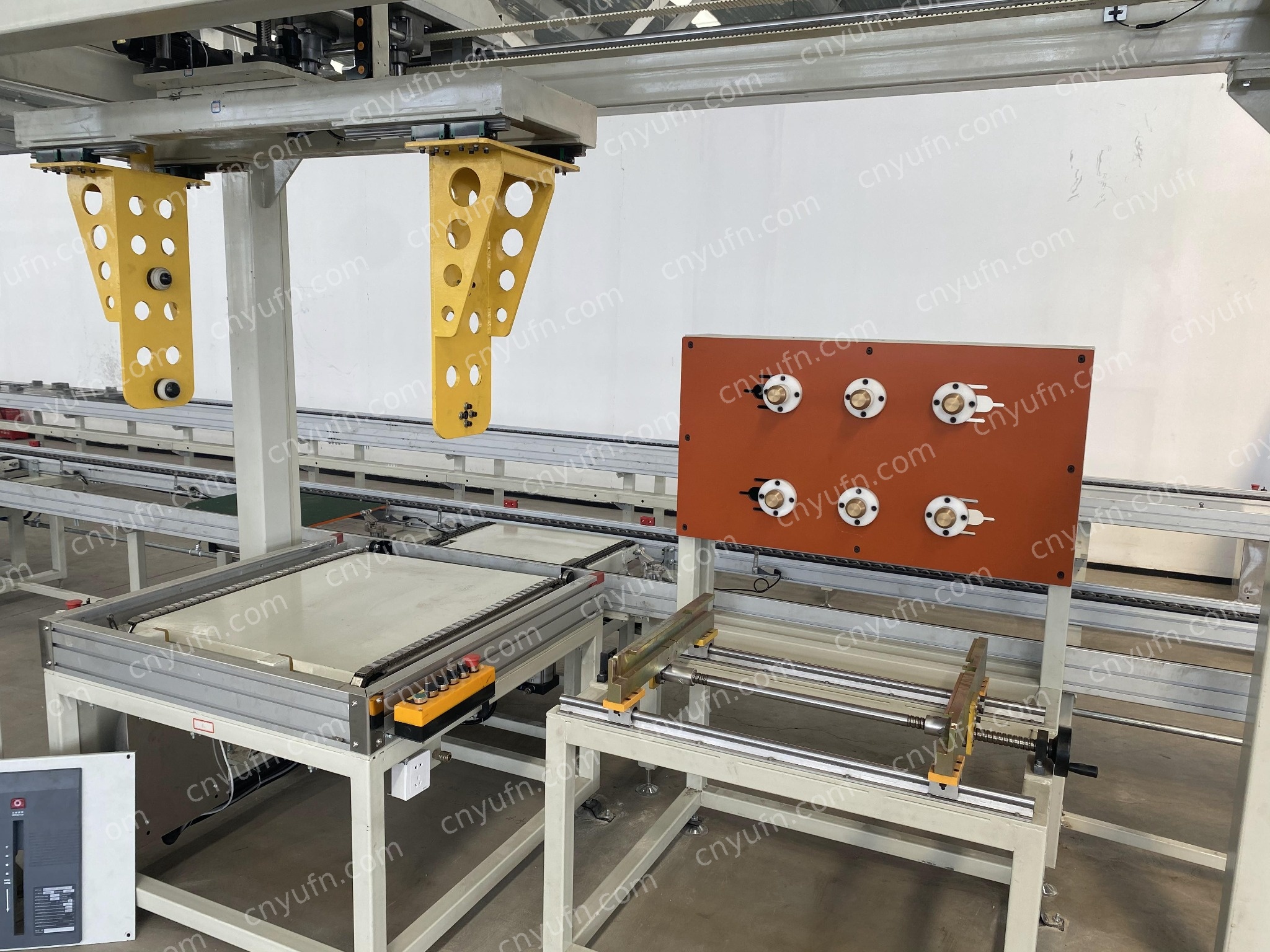
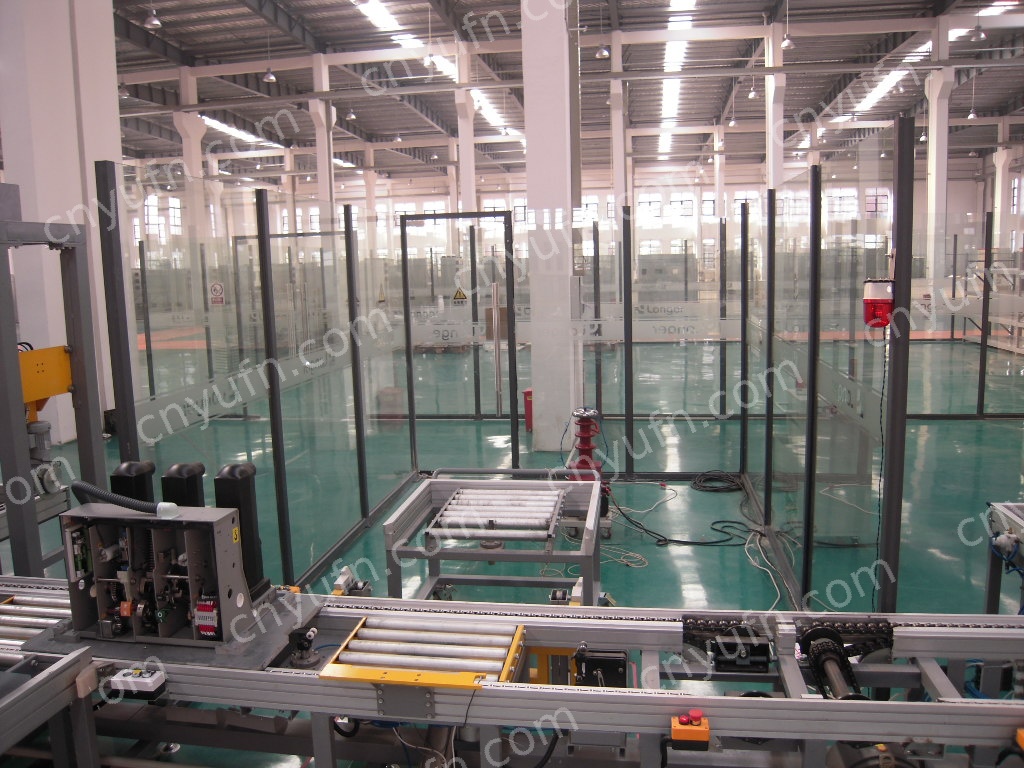
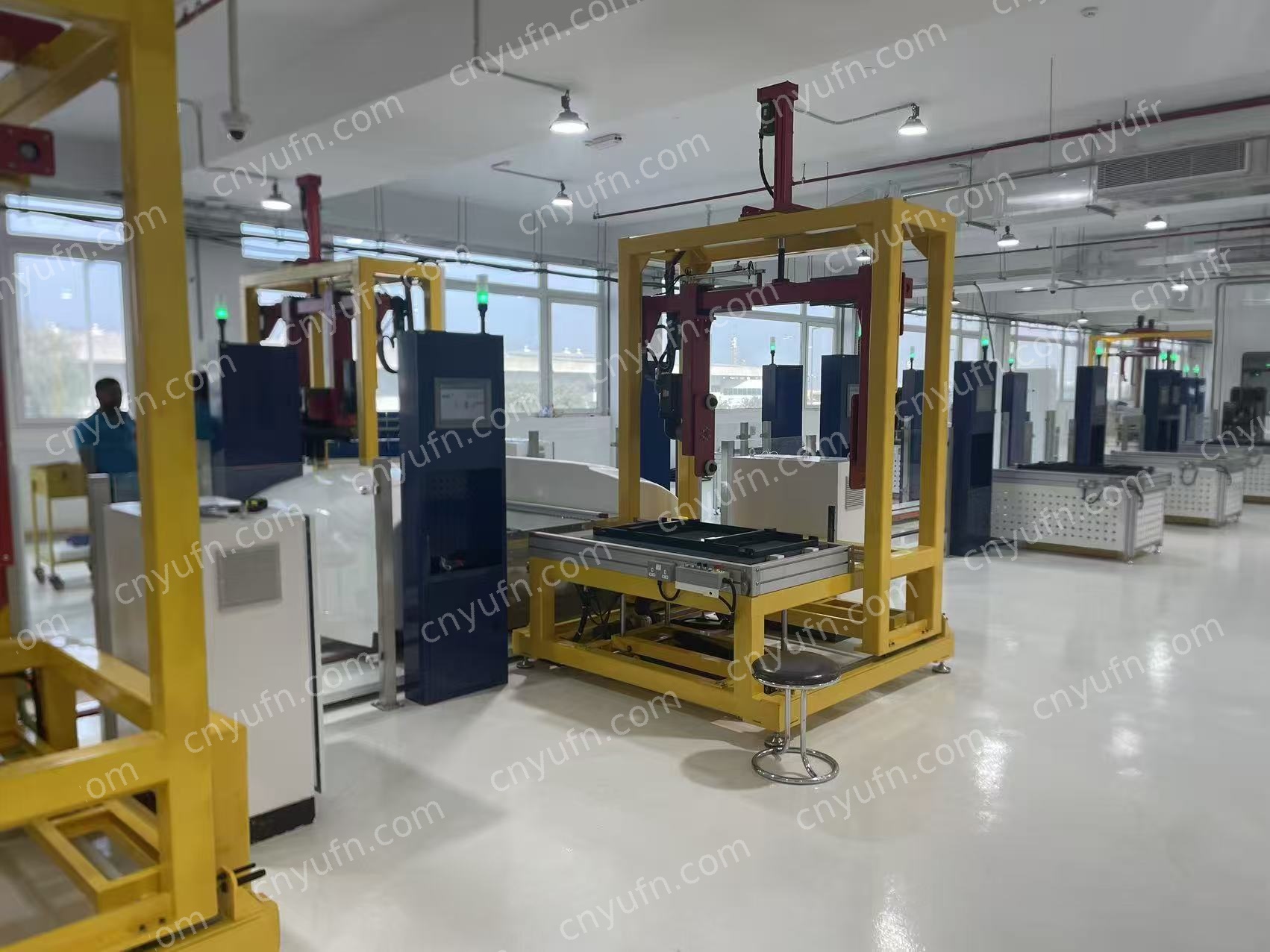
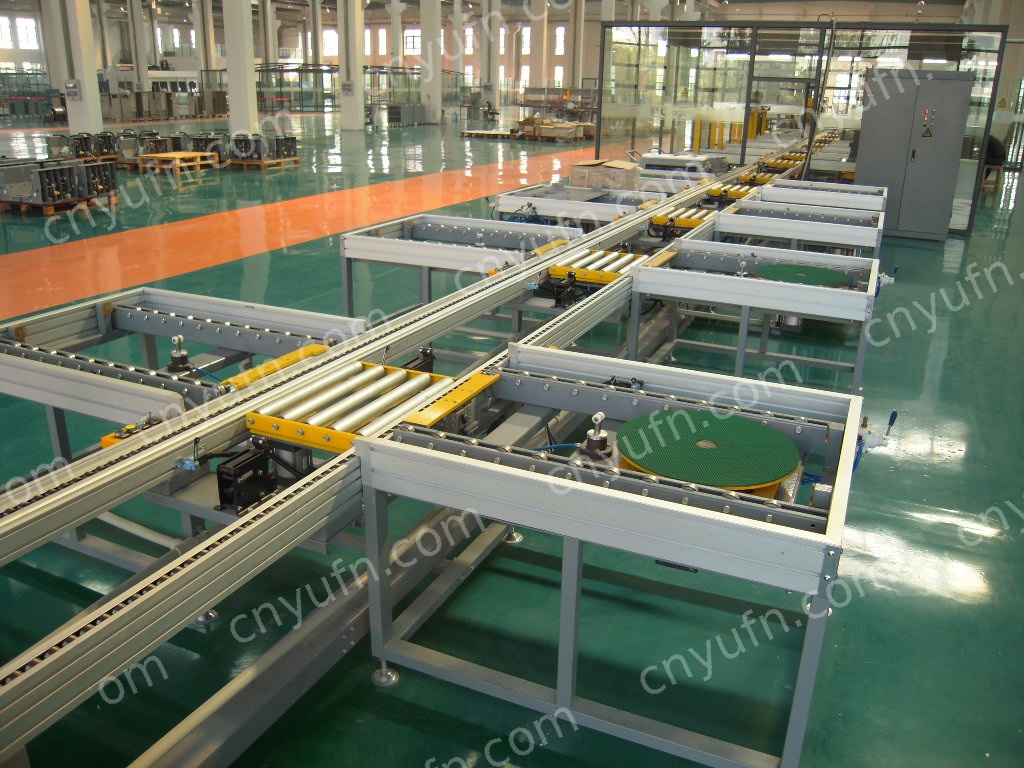
This part of the project highlights inspection integration. The comprehensive test bench supports systematic verification before delivery. Withstand voltage testing is arranged as a dedicated station to support electrical safety confirmation. The assembly flow line connects upstream workstations and final tests so that products move through a defined process instead of being checked in scattered areas.
The line layout is suitable for factories that need to improve the assembly consistency of medium-voltage vacuum circuit breakers without making daily operation complicated. Operators can work at defined stations instead of moving parts randomly across the workshop. Fixtures, lifting assistance, inspection benches, RGV transfer, running-in areas, and final unloading equipment can be combined according to the customer's product size, takt time, test requirements, and available factory space.
Why This VCB Production Line Matters
A VCB assembly line must control both mechanical accuracy and electrical quality. The chassis truck, pole, contact arm, spring mechanism, wiring, operating mechanism, insulation parts, and enclosure-related components all affect final performance. If the process relies too heavily on manual movement, the factory may face unstable positioning, unclear responsibility between stations, longer troubleshooting time, and difficulty presenting production capability to overseas buyers.
Yufeng's solution uses modular stations so each process step has a clear purpose. A chassis truck assembly workstation supports stable placement and easier access. Pole and contact arm assembly stations help workers handle precision parts with better alignment. Mechanical characteristic testing and comprehensive testing help verify operation, travel, timing, loop behavior, and related quality indicators before the product enters the next step. Running-in and withstand voltage testing provide additional confidence for delivery quality.
Practical Benefits for Manufacturers
The benefits include more complete quality control, clearer final inspection responsibility, fewer missed checks, and stronger factory presentation for overseas buyers. When inspection equipment is integrated into the line, it becomes easier to build standardized work instructions and quality records.
For export-oriented manufacturers, a visible and well-organized VCB production line also improves buyer confidence. International customers often evaluate suppliers by factory capability, process control, inspection discipline, and the ability to provide stable batch delivery. A professional line with defined stations, clear material flow, safety fences, test benches, and documented inspection points is easier to audit and easier to explain during factory visits.
Customization Options
The VCB production line can be customized around product model range, assembly sequence, fixture requirements, workshop layout, lifting height, electrical testing standards, station quantity, and production rhythm. Optional modules may include RGV transfer, pneumatic or electric lifting, barcode scanning, process guidance screens, torque confirmation, photo records, test data collection, and MES integration.
Yufeng recommends starting with the customer's real production process instead of copying a fixed line. The design should answer several practical questions: which parts are heavy, which positions require accurate alignment, which tests must be performed before final assembly, where operators need more space, and how quality data should be recorded. This approach helps the production line support daily output while still leaving a path for future digital upgrades.
Application Scenarios
This solution is suitable for VCB vacuum circuit breaker manufacturers, medium-voltage switchgear factories, ring main unit equipment suppliers, electrical cabinet manufacturers, and automation upgrade projects for power transmission and distribution equipment. It can also be adapted for related electrical equipment assembly where station-based production, lifting assistance, and test integration are required.
Conclusion
A well-designed VCB production line is more than a set of machines. It is a manufacturing system that improves workflow, operator safety, process repeatability, inspection visibility, and customer confidence. Taizhou Yufeng Intelligent Equipment Co., Ltd. can design VCB assembly and testing production lines according to product drawings, factory layout, output target, and quality control requirements, helping manufacturers build a more professional and scalable production process.