
Customer Case: Switchgear Circuit Breaker Assembly, Cleanroom Transfer, and Partial Discharge Test Room
Project Overview
This customer case presents a practical manufacturing support system for ring main unit production, medium-voltage switchgear assembly, and power distribution equipment manufacturing. The project is not only about one automation machine. It combines several process-critical units: a circuit breaker assembly inverted manipulator, a cleanroom air shower, a rapid roller door for cleanroom access, and a partial discharge withstand voltage test room.
For factories that produce ring main units, gas insulated switchgear, circuit breaker modules, secondary wiring assemblies, and complete electrical cabinets, the real production challenge is often hidden between workstations. A factory may already have skilled operators, basic platforms, lifting tools, and test equipment, but production can still be difficult to scale if heavy parts are not positioned consistently, clean areas are not controlled, material transfer interrupts the workflow, or final testing is not organized as a professional process.
Taizhou Yufeng Intelligent Equipment Co., Ltd. designed this type of solution for manufacturers that need a more complete and more presentable production system. The project helps the customer improve assembly safety, control cleanroom entry, support stable material movement, and build a stronger final inspection area for medium-voltage equipment. For overseas buyers, engineering contractors, and manufacturers planning export-oriented production, these details matter because they show whether a supplier can manage repeatable manufacturing, not just build individual machines.
Customer Requirements
Before the upgrade, the customer faced several common problems in switchgear manufacturing. Circuit breaker modules and mechanism parts required multiple assembly positions. Operators sometimes needed to lift, turn, hold, and adjust components during installation. When this work depends too much on manual handling or temporary supports, the result can be inconsistent positioning, longer takt time, higher safety risk, and more pressure on experienced workers.
The second requirement was cleanroom control. Ring main unit gas tanks, insulation parts, sealing components, and test-sensitive assemblies are more reliable when the production environment is better managed. A cleanroom does not need to be decorative. It must support real production. Personnel need a controlled entry process, and material movement needs an efficient boundary between the general workshop and the clean area.
The third requirement was smooth logistics. A cleanroom door is not a simple building accessory. If the door opens too slowly, stays open too long, or does not seal properly, it can disturb the clean area and slow down the line. If material carts cannot pass through easily, workers create informal workarounds, and the cleanroom management loses value.
The fourth requirement was professional final testing. Partial discharge testing and withstand voltage testing are important quality confirmation steps for medium-voltage switchgear and related power distribution products. The customer needed a test room that supports safety isolation, clear operation, reliable test flow, and a strong factory presentation for audits and customer visits.
Solution Goals
Yufeng planned the solution around four practical goals.
The first goal was to make heavy or posture-sensitive assembly safer. The inverted manipulator supports turning, positioning, and holding the circuit breaker module so the operator can focus on installation quality instead of manual lifting.
The second goal was to control cleanroom entry. The air shower creates a managed transition from the normal workshop area into the clean production area. It helps reduce dust and particles carried by personnel and reinforces the factory's operating discipline.
The third goal was to make cleanroom transfer faster and more stable. The rapid roller door supports carts, tools, and materials moving in and out of the cleanroom with less air disturbance and less waiting time.
The fourth goal was to make final testing more professional. The partial discharge withstand voltage test room gives the factory a dedicated, safer, and easier-to-explain quality confirmation area for ring main units and medium-voltage switchgear.
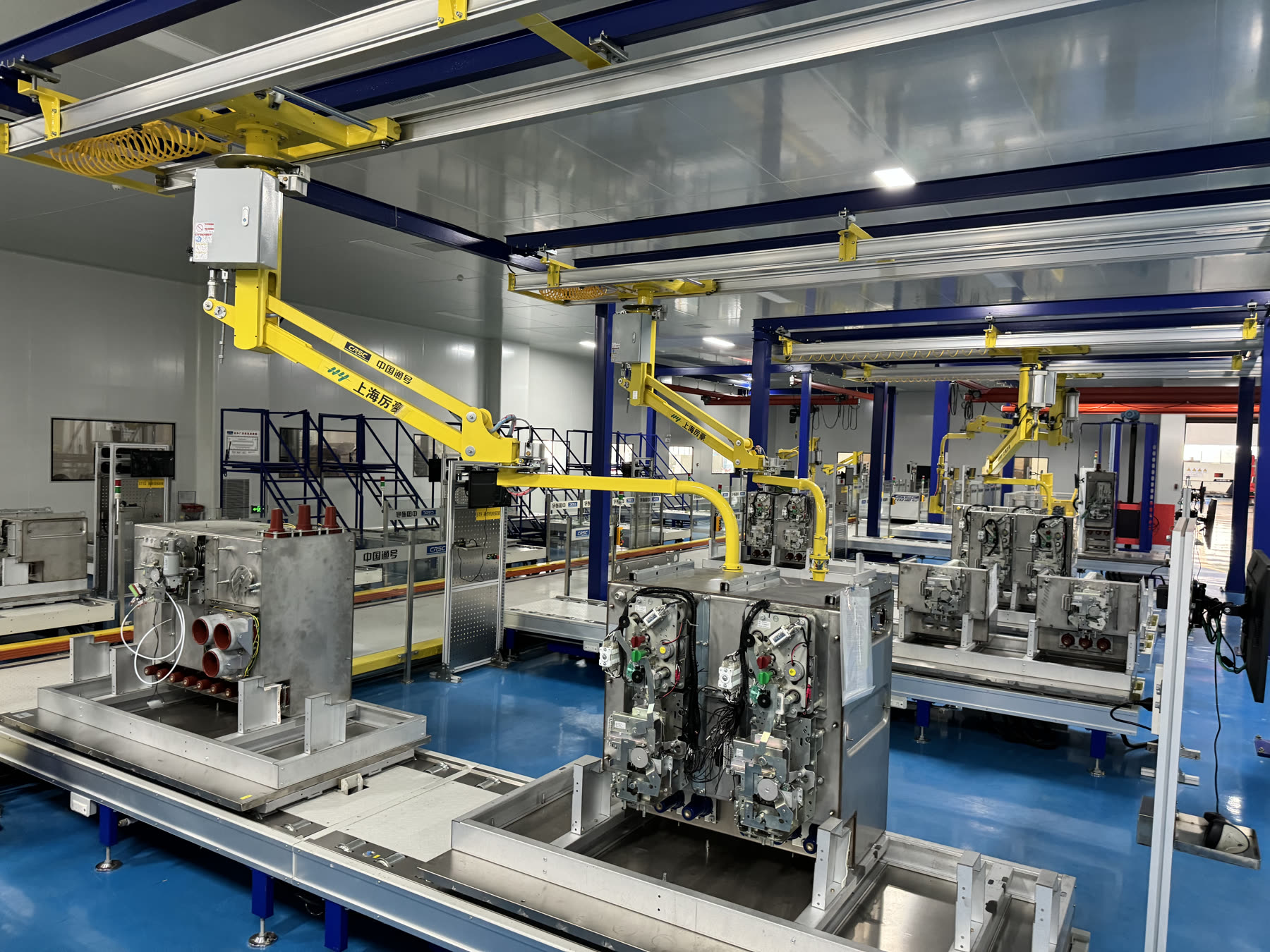
Circuit Breaker Assembly Inverted Manipulator
The circuit breaker assembly inverted manipulator is designed for parts that need turning, suspension, posture adjustment, and assisted assembly. In switchgear manufacturing, a circuit breaker module may require access from different angles during mechanical assembly, wiring, fastening, inspection, or adjustment. Manual turning can increase the risk of scratches, collision, unsafe lifting, and unstable positioning.
The manipulator provides a more controlled way to handle these operations. It can be customized according to component weight, center of gravity, fixture contact surfaces, operating height, and the required assembly sequence. The goal is not to remove the operator from every step. The goal is to give the operator a safer and more repeatable working condition.
Several engineering details are important in this type of equipment. The fixture must hold the workpiece firmly without damaging the surface. The turning motion must be smooth. The operator should be able to control the unit from a safe and convenient position. Mechanical limits, emergency stop functions, and maintenance access should be considered from the beginning. If the customer produces several models, the fixture design should also allow reasonable model changeover.
For a production manager, the value is clear. The workstation can reduce dependence on a few highly experienced lifting workers. It can make training easier for new operators. It can also reduce hidden delays caused by manual adjustment and temporary support methods. Over time, these improvements make the assembly process easier to standardize and easier to expand.
Cleanroom Air Shower
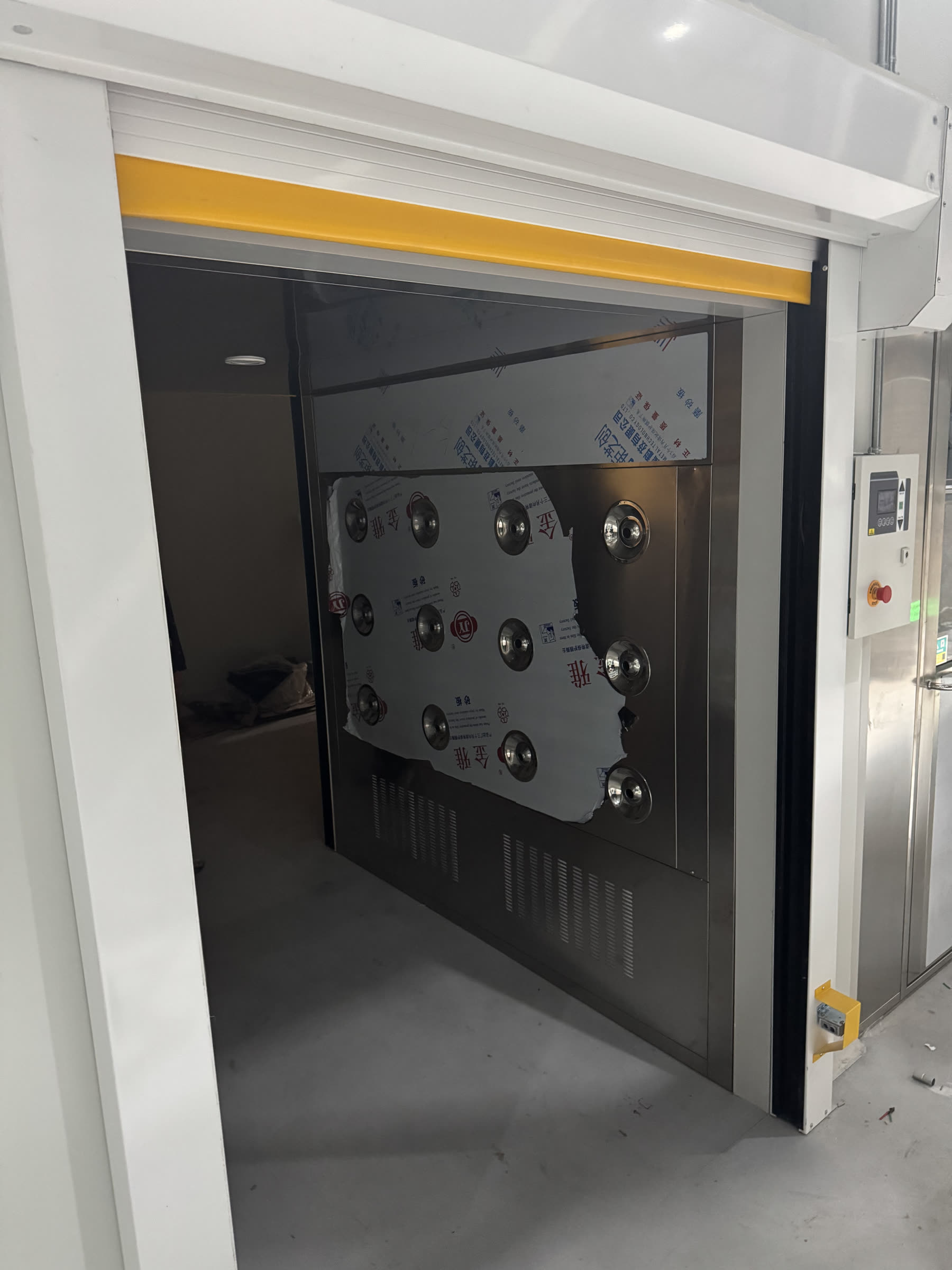
The cleanroom air shower is installed at the entrance of the clean production area. It uses high-speed filtered airflow to remove dust and particles from operators before they enter the controlled zone. More importantly, it creates a visible and enforceable boundary between normal workshop activities and clean assembly activities.
In ring main unit and gas insulated switchgear production, cleanroom management is connected with product reliability. Insulation components, sealing surfaces, gas tank assemblies, and partial discharge-sensitive parts can be affected by poor environmental discipline. Dust or foreign particles may not always create an immediate visible problem, but they can increase rework risk, testing uncertainty, and long-term quality concerns.
The air shower should be selected and arranged according to the number of operators, shift rhythm, entry frequency, interlock logic, filter maintenance, and available space. The entrance and exit doors should not open at the same time. The air shower time should be realistic enough for production instead of being so long that workers try to avoid using it. Good cleanroom equipment is not about appearance. It must fit the daily operating habits of the factory.
For overseas buyers visiting a supplier, an air shower also communicates an important message: the manufacturer understands that switchgear quality depends on controlled process conditions, not only final inspection.
Rapid Roller Door for Cleanroom Entry and Exit
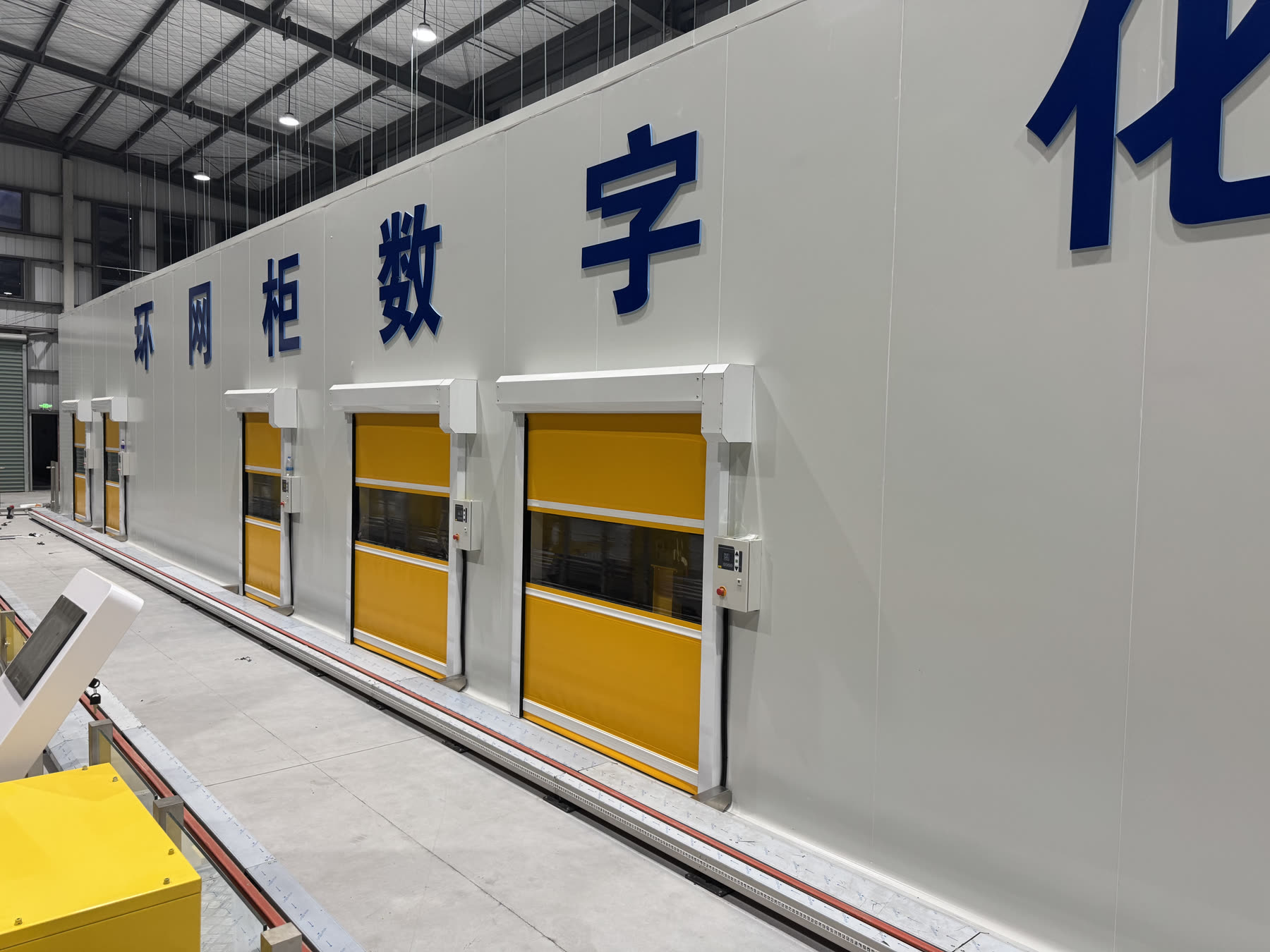
The rapid roller door controls the boundary between the cleanroom and the general workshop area. Its function is to open quickly, close quickly, and maintain a better separation between two areas with different cleanliness requirements. In a real factory, this door must support both people and material movement.
Door speed, sealing structure, sensor arrangement, safety protection, and maintenance access all influence the final result. If the door stays open too long, air exchange increases. If the sensor is unreliable, material carts may stop and wait. If the sealing structure is weak, the cleanroom air management becomes less effective. If the door is difficult to maintain, production teams may keep it open, which defeats the purpose of the controlled area.
In this project, the roller door was treated as part of the production flow. Its position and specification were considered together with cart routes, cleanroom layout, equipment maintenance zones, personnel movement, and safety rules. This prevents a common problem: the door is installed, but daily production does not actually run smoothly through it.
For a switchgear production line, the cleanroom door is especially valuable when the factory needs to move gas tanks, cabinet parts, tooling carts, test samples, or semi-finished assemblies between controlled and non-controlled areas. A well-planned door keeps the line practical instead of turning the cleanroom into a bottleneck.
Partial Discharge Withstand Voltage Test Room
The partial discharge withstand voltage test room is one of the most important quality confirmation areas for medium-voltage switchgear, ring main units, and related electrical equipment. It supports high-voltage testing, partial discharge inspection, safety isolation, operator control, alarms, and test flow management.
In medium-voltage equipment manufacturing, final testing is not only a compliance step. It is a feedback point for the entire production process. If assembly quality, insulation handling, cleanliness, mechanical positioning, or tightening consistency is poor, the test process may reveal problems. A professional test room helps the factory identify issues earlier, reduce delivery risk, and provide stronger confidence to customers.
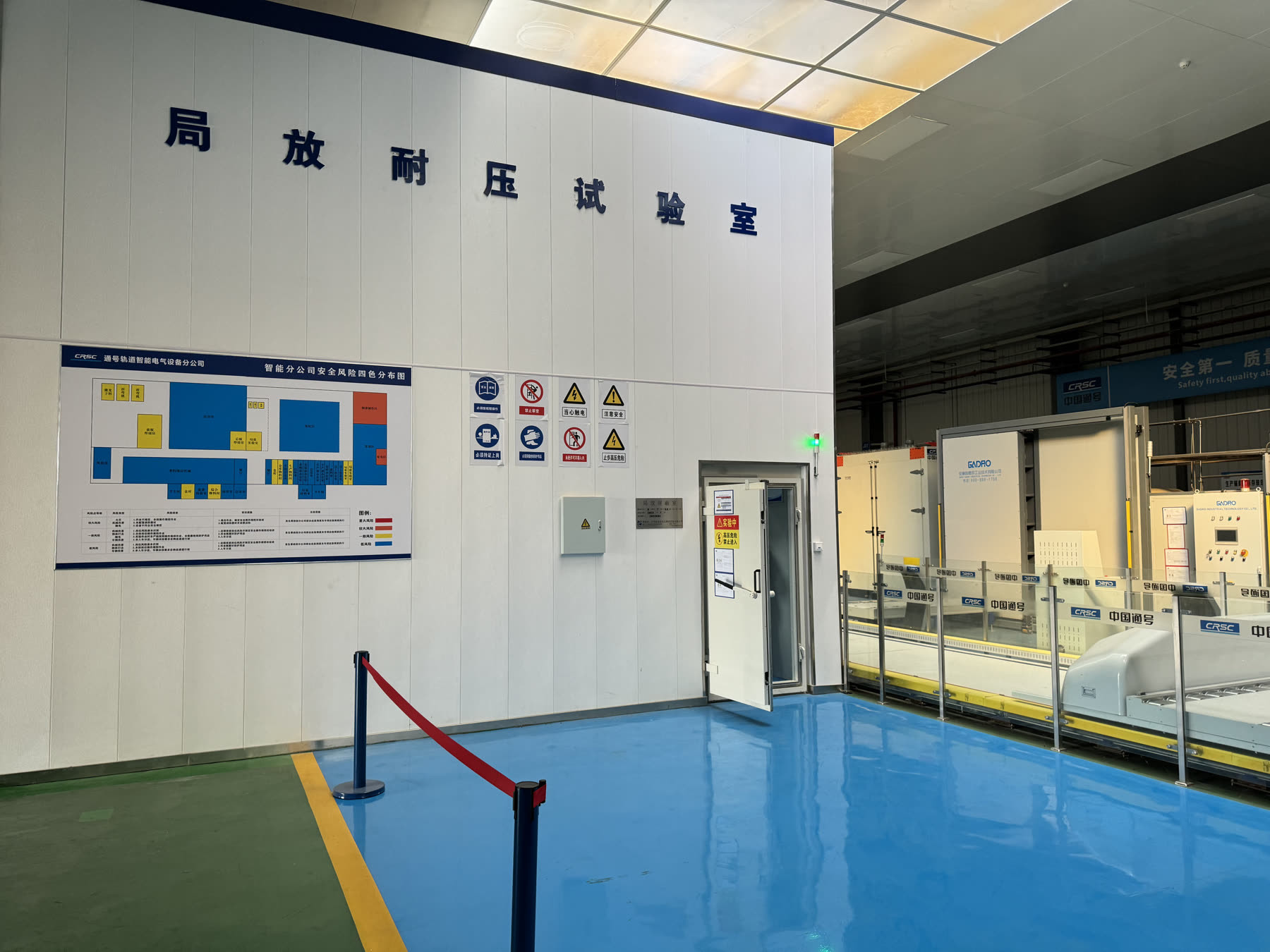
The layout of a test room should consider grounding, shielding, safety door interlocks, warning lights, test equipment arrangement, sample entry and exit, operator visibility, and emergency response. The test area should not be designed only around placing equipment. It must protect people, support stable operation, and make the test process understandable.
For international buyers, the test room is often one of the most important areas during supplier evaluation. A factory can claim that it has quality control, but a dedicated and well-organized test room shows that the supplier has invested in the final verification process. This is especially important for products used in power distribution, industrial facilities, infrastructure projects, and utility networks.
How the Process Units Work Together
These four units belong to different parts of the factory, but they support one connected manufacturing logic.
The inverted manipulator improves the assembly process for heavy and position-sensitive components. The air shower improves personnel entry control. The rapid roller door improves cleanroom logistics and environmental separation. The partial discharge withstand voltage test room improves final quality verification.
When they are planned together, the customer receives more than several pieces of equipment. The factory receives a better process chain. Assembly becomes safer and more repeatable. The clean area becomes easier to manage. Material transfer becomes smoother. Testing becomes more professional. The entire production line becomes easier to explain to customers, auditors, and overseas project teams.
This is an important point for global equipment buyers. A supplier that understands only one workstation may miss the real production bottleneck. A supplier that understands the complete process can help the customer build a factory system that supports delivery, quality, and future expansion.
Application Scenarios
This solution is suitable for many manufacturing scenarios related to power distribution equipment and industrial electrical products.
- Ring main unit production line
- Gas insulated switchgear assembly line
- Medium-voltage switchgear factory
- Circuit breaker module assembly workstation
- Cleanroom assembly area for electrical components
- Partial discharge and withstand voltage test area
- Turnkey switchgear production workshop upgrade
- Export-oriented power equipment manufacturing plant
- Factory presentation area for overseas customer audits
The same engineering logic can also be adapted to other industries where heavy components, clean assembly, controlled transfer, and final high-reliability testing are required.
Benefits for Overseas Buyers
For overseas buyers, the value of this project is practical and easy to understand. It helps reduce production risk before shipment. It improves factory presentation during remote or on-site audits. It creates clearer process boundaries. It supports more repeatable assembly and more professional testing.
The project also helps international buyers communicate internally. Procurement teams can explain why the solution is not just a machine purchase. Engineering teams can understand how the process units connect. Quality teams can see where environmental control and final testing are strengthened. Management teams can evaluate the project as a long-term factory capability upgrade.
Yufeng can support this type of project with layout discussion, equipment concept design, fixture design, manufacturing, factory acceptance testing, video inspection, English documentation, spare parts suggestions, and remote support. For cross-border projects, this structured communication is often as important as the equipment itself.
Optional Future Upgrades
Depending on production capacity and budget, the customer can expand the system in several directions.
- Barcode scanning for workpiece identification
- Digital work instructions at key assembly stations
- Torque tool data recording
- Test result archiving for partial discharge and withstand voltage inspection
- Station status display and production takt monitoring
- AGV or automated cart connection for material transfer
- MES interface for production traceability
- Camera-based process confirmation
- Cleanroom access authority management
- Additional lifting tables for cabinet and gas tank assembly
These upgrades do not need to be implemented all at once. A practical roadmap is usually better. The factory can first stabilize the critical assembly, cleanroom, and testing processes, then add digital traceability and automation where the return is clear.
Project Summary
This customer case shows that a professional switchgear production line is not built only with conveyors and assembly platforms. It also needs safe assisted assembly, controlled cleanroom entry, efficient material transfer, and reliable final testing.
The circuit breaker assembly inverted manipulator makes heavy component handling safer and more repeatable. The cleanroom air shower creates a controlled entry process for personnel. The rapid roller door supports smoother cleanroom logistics. The partial discharge withstand voltage test room strengthens the factory's final quality confirmation.
Together, these units help the customer build a more complete manufacturing system for ring main units and medium-voltage switchgear. For global manufacturers and overseas buyers looking for a switchgear automation production line, custom automation equipment, or a turnkey industrial automation solution from China, this kind of project demonstrates Yufeng's ability to understand real factory processes and turn them into practical engineering solutions.