
Customer Case: GIS Gas Tank Production Line, Bushing Assembly, and Final Assembly Flow Line
Project Overview
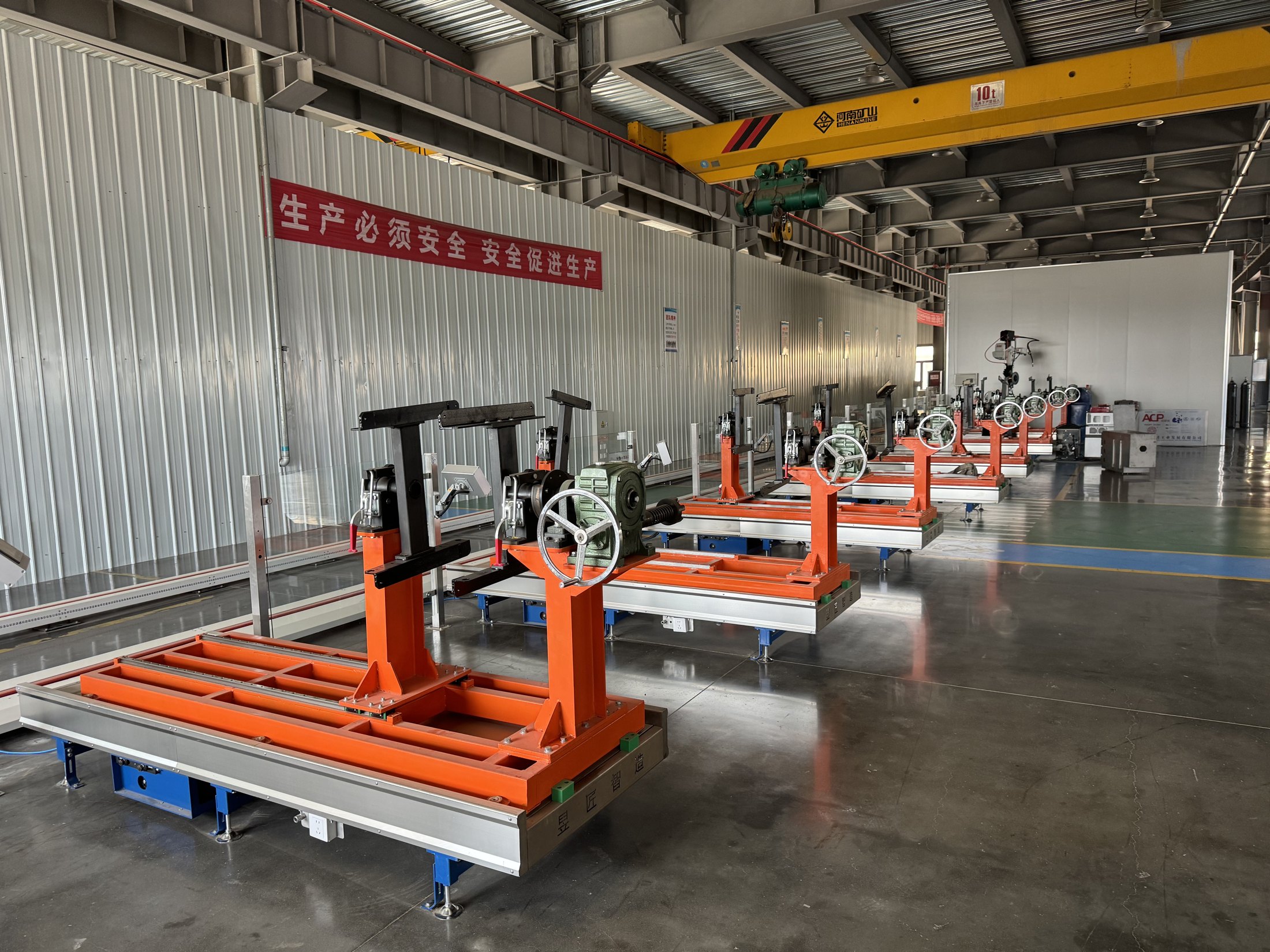
This customer case focuses on a complete GIS gas tank production line project built for switchgear manufacturing, gas insulated switchgear component assembly, and export-oriented electrical equipment production. The customer did not need a single isolated machine. The real requirement was a connected production system that could organize gas tank fabrication, bushing and insulator assembly, box flipping, busbar and main bus installation, and final assembly flow in a more stable and more professional way.
For manufacturers of ring main units, gas insulated switchgear, medium-voltage cabinets, and related power distribution equipment, the true production bottleneck is rarely one individual workstation. It is usually the connection between several critical operations. If the main gas tank body is difficult to position, if bushing and insulation parts require awkward manual installation, if the workpiece must be turned by labor-intensive methods, or if busbar fitting depends too much on worker experience, the whole line becomes difficult to scale. Output may still be possible, but consistency, training speed, process visibility, and customer confidence all suffer.
Taizhou Yufeng Intelligent Equipment Co., Ltd. approached this project as a real manufacturing system instead of a simple equipment sale. The solution was organized around practical engineering questions. How should the gas tank enter the line? Where should the assembly position be fixed? Which workstations need turning support? Which operations need more ergonomic access? How should conductive parts such as busbars and main bus links be arranged so the worker can install them with less re-positioning and fewer corrections? How can the full line look clear enough for an overseas buyer to understand it during a factory audit or a video review?
These are the questions that shaped the final result. The project demonstrates how a Chinese automation production line supplier can support not only output improvement, but also factory presentation, quality control, process repeatability, and long-term production expansion.
Customer Requirements and Manufacturing Challenges
Before the upgrade, the customer faced a set of problems that are common in gas tank assembly and switchgear production. The first problem was body positioning. Gas tank structures, cabinet modules, and matching parts often require stable orientation through several assembly steps. Manual handling can work in small-volume production, but once the order mix grows and export delivery becomes more frequent, positioning errors and repeated manual adjustment consume too much time.
The second challenge was operator posture. Bushing installation and insulation component fitting often require precise hand movements, good visibility, and a clear tool approach angle. If the product is too high, too low, or partly blocked by the surrounding structure, workers compensate with bending, reaching, climbing, or temporary supports. This creates fatigue and process variation.
The third challenge was flipping and orientation change. Certain gas tank or bushing-related parts must move from one posture to another to support the next assembly action. If the flipping step is handled by cranes or improvised support methods, the production rhythm slows down and safety risk increases. Even when workers are skilled, the process remains heavily dependent on individual experience.
The fourth challenge was conductive part assembly. Busbars and main bus links must be installed in the correct order, with good access and stable positioning. If the workstation is not organized around the sequence of the task, the operator spends too much time finding the right angle, moving tools, shifting the body position, and confirming clearances.
The fifth challenge was line-level coordination. The customer wanted a production line that would not only improve internal efficiency, but also serve as a strong reference for overseas buyers. For global B2B customers, especially those evaluating a new supplier in China, workshop organization matters. They want to see whether the process looks controlled, whether the workstation logic is understandable, whether quality checkpoints appear deliberate, and whether the line can realistically support repeatable delivery.
Solution Goals
Yufeng designed the project around five practical goals.
The first goal was to stabilize the main GIS gas tank production flow. Instead of treating every station as a separate island, the line needed a clear process route that showed where the body entered, where it was positioned, where subassemblies were installed, where orientation changed, and where the next operation began.
The second goal was to improve ergonomics in bushing and insulator assembly. A proper assembly line should reduce unnecessary reaching, lifting, turning, and searching. The worker should spend more time on actual installation and less time compensating for a poor workstation layout.
The third goal was to make flipping safer and more repeatable. A vertical box flipping machine or equivalent turning support is valuable not because it makes the project look advanced, but because it protects the workpiece, reduces handling risk, and gives the next assembly step a more reliable starting position.
The fourth goal was to organize busbar and main bus assembly around real installation logic. Good line design helps the operator install conductive parts in the correct sequence, within a clear work zone, and with less rework caused by orientation or spacing issues.
The fifth goal was to make the final assembly flow line more suitable for scale, training, and customer presentation. The line should be understandable to new operators, manageable for supervisors, and persuasive to international buyers.
GIS Gas Tank Production Line Layout
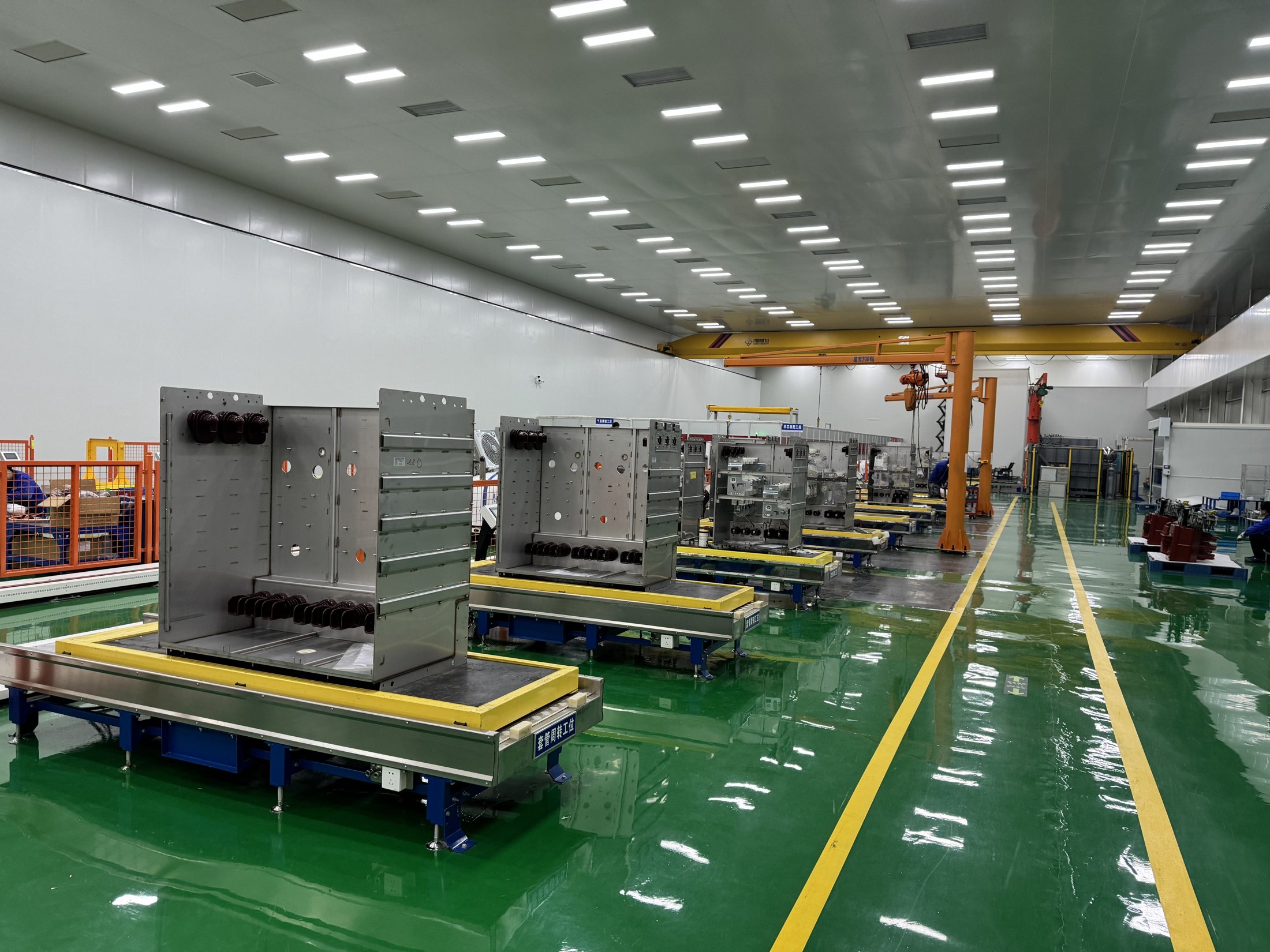
The main GIS gas tank production line uses a structured station layout instead of a loose workshop arrangement. This is important because gas tank production is not a purely linear sequence of identical tasks. It involves body handling, positioning, partial assembly, orientation control, subcomponent matching, and process transfer. A clear station-based layout gives the customer a stronger foundation for all of these operations.
In practical terms, the line layout helps in several ways. First, it defines a stable movement path for the workpiece. Second, it makes process ownership more visible: each station is associated with a specific task rather than a vague shared area. Third, it makes process auditing easier because the flow of the product is clearer. Fourth, it supports future upgrades such as digital work instructions, barcode tracking, status boards, or MES connection.
For overseas buyers, station clarity has real value. A factory that can show a readable process flow appears more reliable than one that relies on verbal explanation alone. During remote meetings, project reviews, or customer audits, a production line with visible logic creates confidence much faster.
Gas Tank Bushing and Insulator Assembly Workstation
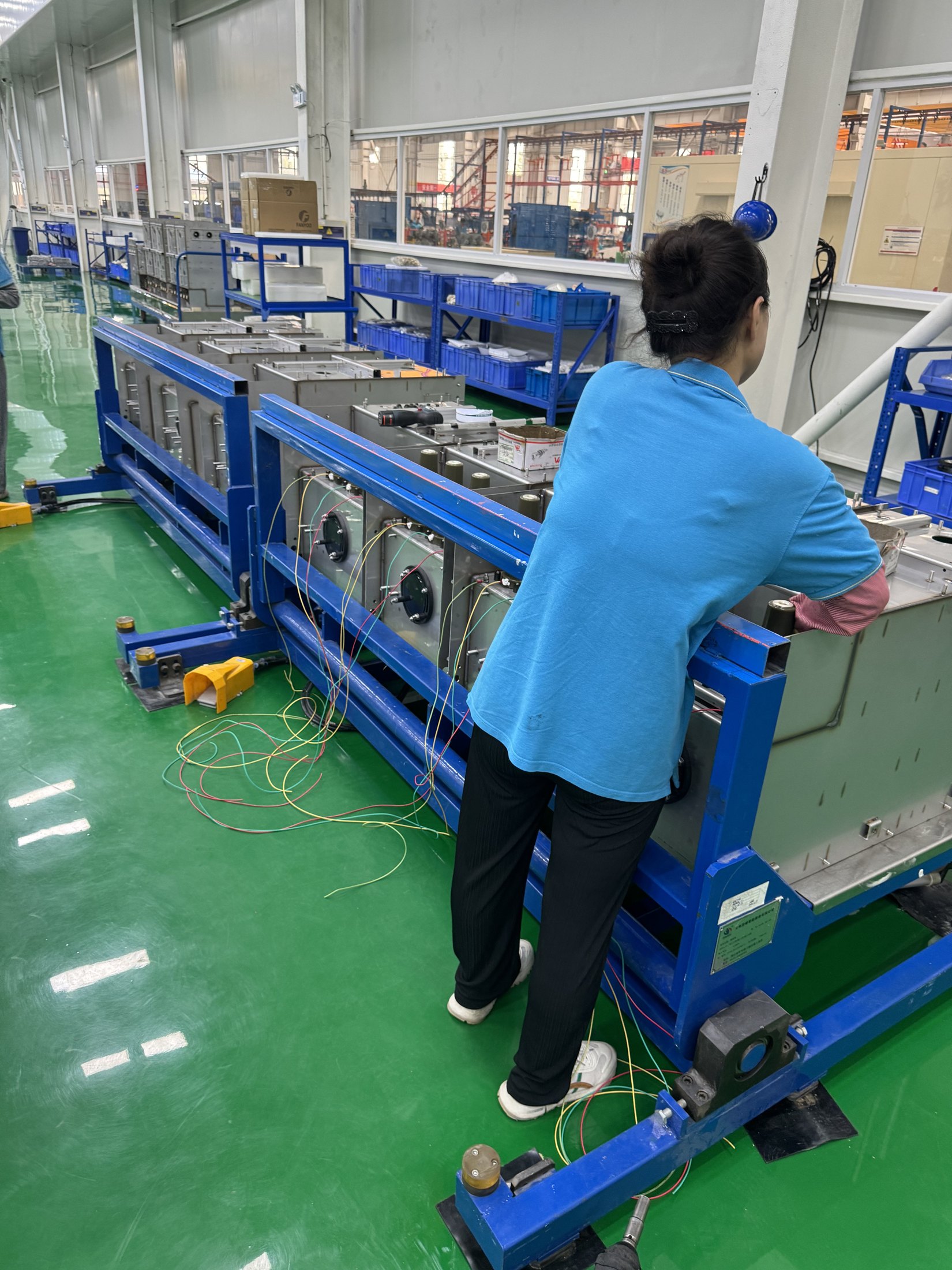
Bushing and insulator assembly is one of the most process-sensitive steps in this project. These parts are connected to both structural fit and electrical performance, so the assembly process must be careful, repeatable, and worker-friendly. Many factories do not fail here because the workers lack skill. They fail because the workstation does not support the skill that workers already have.
A better workstation improves visibility, hand access, support position, and fixture reference. It should allow the worker to see the contact area clearly, hold tools at a natural angle, place auxiliary parts nearby, and confirm the installation without awkward posture changes. When this is done well, the assembly process becomes easier to standardize. The result is not only faster cycle time. It is more consistent quality and easier training.
For Yufeng, this kind of workstation is not designed by appearance. It is designed by observing the real sequence of operations. Which side does the worker approach from? Which hand motion is repeated most often? Where is the tool naturally placed after use? Which surface must remain protected? Where does the next part come from? A good answer to these questions produces a workstation that operators are willing to use every day, not just a platform that looks acceptable in a quotation file.
Gas Tank Bushing Vertical Box Flipping Machine
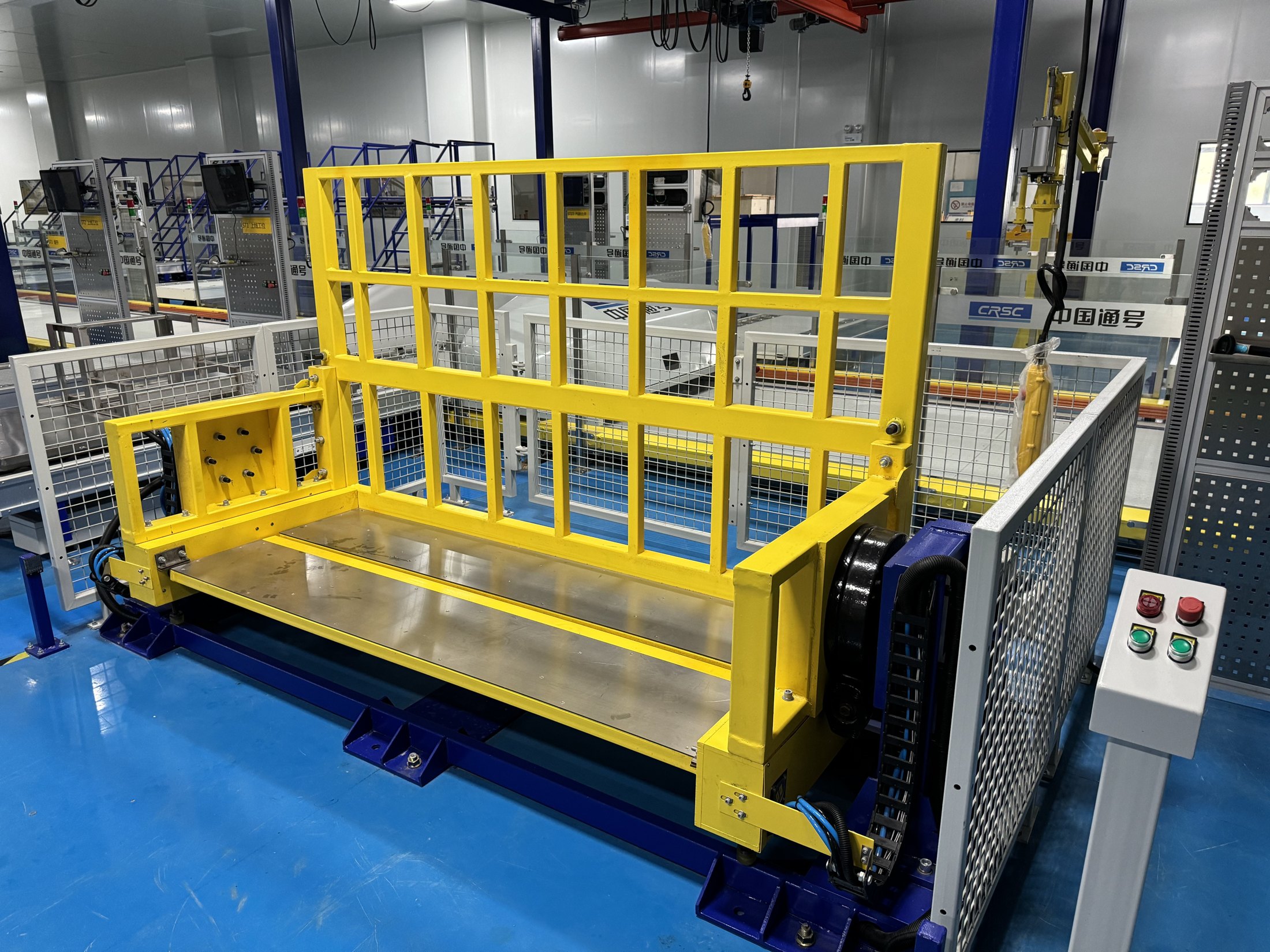
The vertical box flipping machine is one of the most representative engineering modules in this case. In gas tank and switchgear production, orientation change is often more difficult than the assembly itself. A part may need to be turned to expose the next installation surface, to support fastening from another angle, or to allow the worker to inspect the connection point more clearly. If that change is handled manually, the task quickly becomes dependent on crane timing, operator coordination, and temporary support methods.
A proper flipping unit solves a much deeper problem. It creates a controlled transition between one process posture and the next. That means the workpiece is supported, the turning path is predictable, and the next operator receives the product in a usable orientation. Yufeng treats flipping equipment as part of process control, not just material handling.
Several details matter here. The gripping structure must protect the product surface. The center-of-gravity logic must be understood before the flipping path is defined. The operator must be able to start, stop, and observe the movement from a safe position. The machine should also fit naturally into the wider station layout, so it does not turn into a bottleneck.
For global manufacturers, this kind of equipment is a signal that the supplier understands real workshop pain points. Many production delays come from steps that are physically difficult but rarely highlighted in proposal documents. The flipping stage is one of them. A supplier that solves it well is usually thinking in process terms, not just equipment terms.
Gas Tank Busbar and Main Bus Assembly
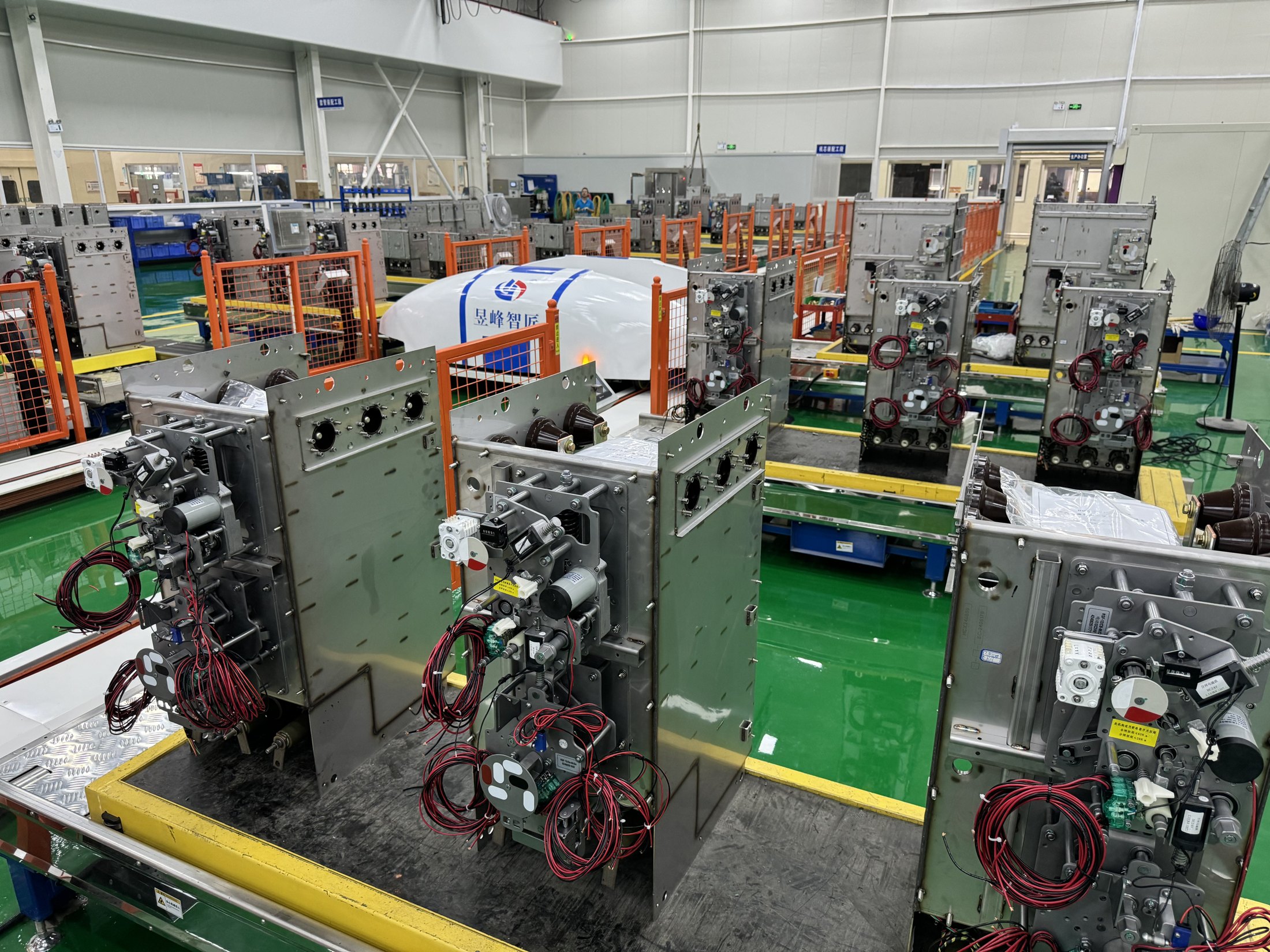
Busbar and main bus assembly introduces another layer of process complexity. Conductive parts must often follow a fixed installation order, maintain specific spatial relationships, and remain accessible for fastening, checking, and later inspection. If the workstation is poorly organized, workers lose time repositioning themselves, moving tools, and correcting clearances.
A better assembly station supports the sequence rather than fighting it. The part support structure, fixture reference points, and tool access path should all reflect the actual order of work. The operator should be able to understand the next move without unnecessary searching. This does not just save time. It improves confidence and reduces the chance that small installation errors will travel downstream.
In export-oriented electrical equipment manufacturing, this matters a great deal. Busbar assembly mistakes can be costly in both labor and credibility. A production line that visibly supports correct conductive part installation sends a strong message to buyers: the supplier is not only capable of building the product, but also capable of controlling the assembly method behind the product.
Final Assembly Flow Line and Overall Production Logic
The final assembly flow line is where the value of the earlier stations becomes visible. A strong final line is not simply a row of equipment. It is the organized expression of a production logic. The body must arrive in the right condition. The subassemblies must enter at the correct stage. Orientation changes must happen where they create the most benefit. Conductive parts must be installed when the workspace is still open enough to support accurate fitting. Inspection or confirmation steps must appear before problems become expensive.
This is where many manufacturing projects succeed or fail. A factory may own good individual machines but still struggle if the handoff between operations is unclear. Yufeng's approach in this case was to make the final assembly line function as a visible process chain. Workers, supervisors, quality staff, and visiting customers should all be able to understand what the line is doing.
That visibility has commercial value. When overseas buyers review a factory, they want to see evidence of process discipline. A final assembly line with clear workstation structure, safe operator zones, and understandable product movement gives that evidence. It shows that the factory is not depending on hidden improvisation to achieve output.
Quality Control and Process Replication
Another major benefit of this project is the ability to move quality control earlier into the process. In a less organized workshop, many issues are discovered only after several dependent tasks are already complete. Once the product reaches a late-stage inspection point, the cost of correction is higher. A more structured line makes it easier to define intermediate checkpoints.
For example, after bushing and insulator assembly, a process confirmation can be added before the product moves forward. After flipping, another checkpoint can confirm that posture-sensitive parts remain in the correct condition. After busbar installation, visual or measured checks can be performed before the next enclosure or wiring action begins. These earlier confirmations reduce rework and help the factory understand where problems originate.
This also supports training replication. As the customer grows, the factory cannot rely on a small number of highly experienced workers to carry the entire line. The production system must make it easier for newer operators to succeed. Clear stations, stable fixtures, safer turning equipment, and more visible process checkpoints all contribute to that goal.
Value for Global Buyers and Export Projects
For international buyers, this project is valuable because it translates technical capability into something visible and practical. It shows that the supplier understands GIS gas tank production, not just in concept, but in terms of everyday manufacturing motions. It also shows that the supplier can connect several process-critical operations into one coherent line.
That matters when the buyer is evaluating a Chinese automation line supplier for a long-term relationship. Price is only one part of the decision. The buyer also wants to know whether the supplier can think through layout, operator access, process order, fixture logic, flipping safety, and future line expansion. This project demonstrates those capabilities through real manufacturing scenes rather than abstract claims.
The case is especially relevant to buyers looking for:
- a GIS gas tank production line manufacturer in China
- a gas tank assembly line for medium-voltage switchgear
- a custom automation solution for bushing and insulator assembly
- a box flipping machine for switchgear body orientation change
- a busbar and main bus assembly workstation
- a turnkey switchgear production line with customer-case references
Project Summary
This customer case shows how a professional GIS gas tank production line can be organized around real production actions instead of generic automation language. The main gas tank line creates the production framework. The bushing and insulator assembly station improves precision and ergonomics. The vertical box flipping machine makes posture changes safer and more repeatable. The busbar and main bus assembly station supports correct conductive part installation. The final assembly flow line connects these operations into a clearer and more scalable manufacturing process.
For the customer, the result is not only higher efficiency. It is stronger process visibility, easier training, earlier quality control, safer handling, and better factory presentation for global buyers. For overseas procurement teams searching for a switchgear automation line, gas insulated switchgear production line, or custom gas tank assembly solution from China, this project is a practical reference that demonstrates Yufeng's engineering approach in real manufacturing conditions.